Bulletin · Euro Weeks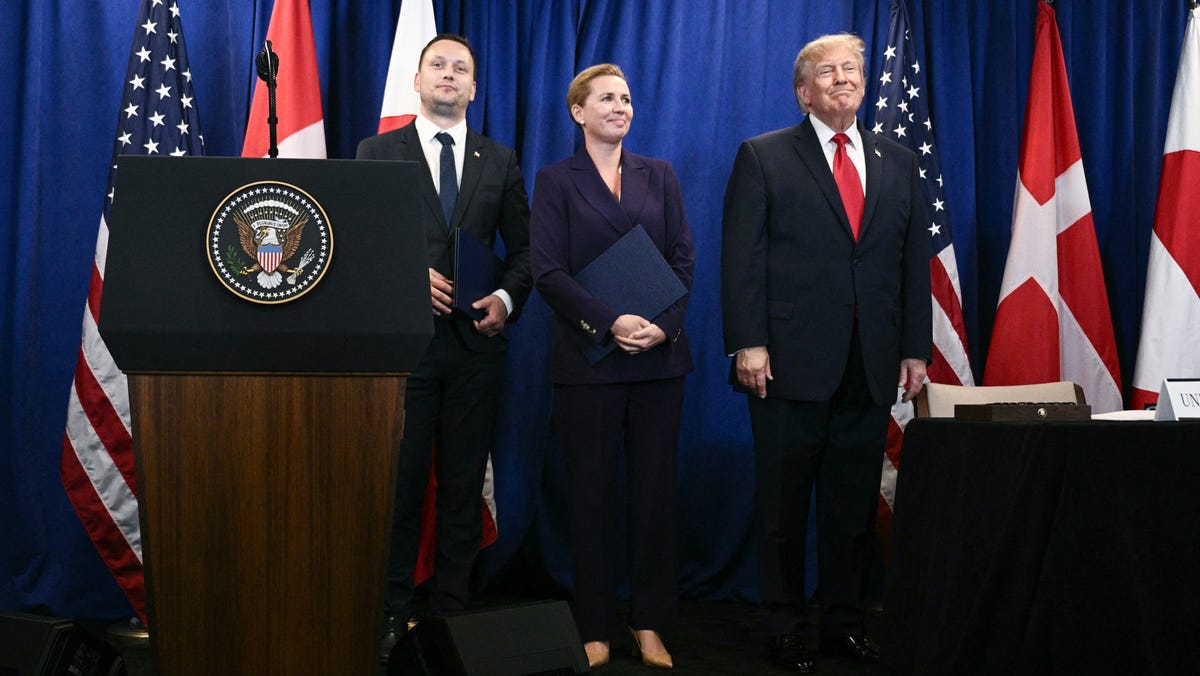
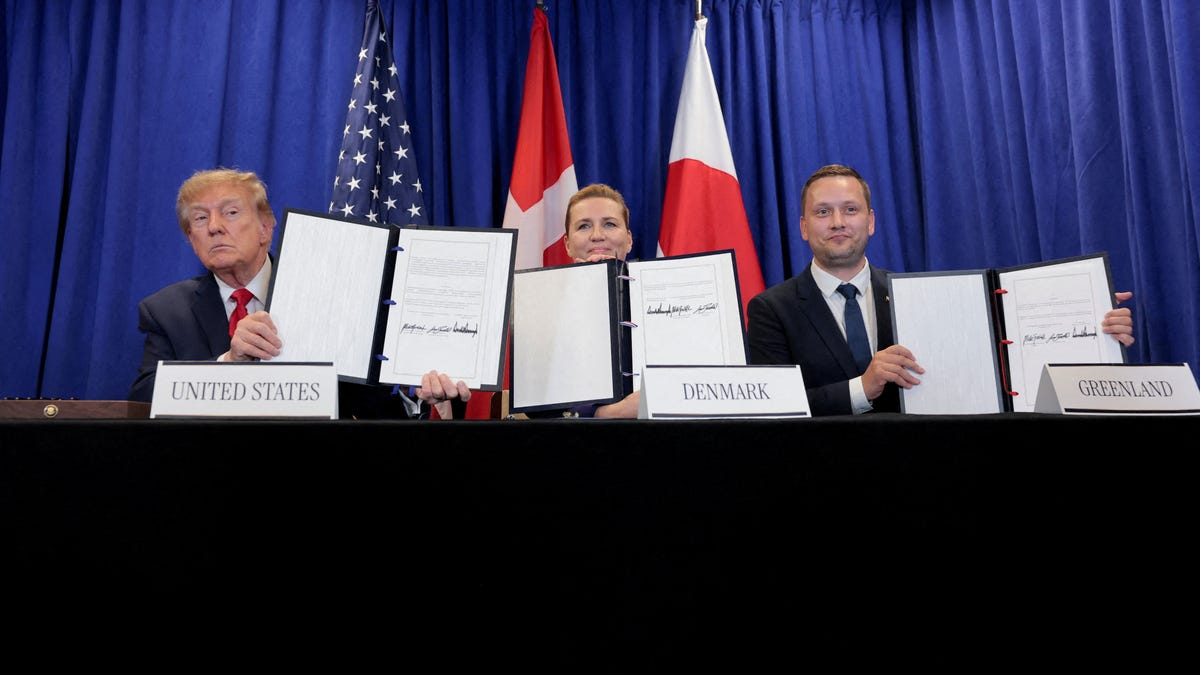
With geopolitical competition heating up in the Arctic, President Trump was right to draw attention to Greenland's importance to American security. But his rhetoric turned combative along the way. Luke Coffey | Opinion contributor Show Caption On Sept. 22, on the sidelines of the United Nations General Assembly, President Donald Trump , Danish Prime Minister Mette Frederiksen and Greenlandic Prime Minister Jens-Frederik Nielsen signed a trilateral agreement that secures America's role in Greenland for generations.
Few issues have strained the transatlantic relationship in recent months more than Greenland. Yet the island's strategic value is nothing new, not only to the United States but also to the defense of the North Atlantic. During World War II and throughout the Cold War, the United States maintained multiple bases across Greenland .
After the Cold War, Washington drastically reduced its presence, eventually consolidating it at Pituffik Space Base in northwestern Greenland, its sole remaining base on the island. With geopolitical competition heating up in the Arctic , Trump was right to draw attention to Greenland's importance to American security. But his rhetoric turned combative along the way, at one point refusing to rule out military force to take the island, which alarmed America's NATO allies .
The Sept. 22 agreement finally puts the issue to bed, at least for now. New agreement bans China, Russia from building military facilities The new agreement doesn't fundamentally change the framework the United States already had in place with Denmark and Greenland, dating to 1951 . But it does build on it.
It allows new U.S. bases at Narsarsuaq and Mestersvig, and it adds three notable provisions. First, the agreement accounts for Greenland's growing autonomy from Denmark and its possible independence. If Greenland does break away, the agreement requires that the new state remain in NATO and take on Denmark's obligations, keeping the U.S. military presence in place.
The 1951 pact offered no such guarantee because this was not on the table at the time. That gives America and NATO continuity no matter how Greenland's relationship with Denmark evolves. Second, the agreement explicitly bars non-NATO countries – in this case Russia and China – from establishing military facilities on the island or investing in its sensitive sectors .
This was largely implicit in the previous agreement but is now stated directly. In reality, this largely codifies what was already happening. Neither China nor Russia has a military presence in Greenland.
Chinese firms have tried to buy into the island's infrastructure, but Denmark apparently blocked a bid for a decommissioned naval base in 2016 and stepped in to cofinance three airports that a state-owned Chinese company was vying to build. Finally, the agreement reaffirms the sovereignty and territorial integrity of the Kingdom of Denmark while recognizing the Greenlandic people's right to self-determination. That matters, because Trump repeatedly questioned whether Denmark had any legal claim to Greenland.
One of Trump's top priorities is missing from the Greenland deal But one of the Trump administration's top priorities on the island is missing from the agreement: rare earths and other natural resources . That's where the next phase of the U.S.-Greenland-Denmark relationship should focus. Greenland has significant mineral resources, but getting them out of the ground is hard and expensive.
The island has only two active mines , and no rare earth project has reached commercial production. Its geography, thin infrastructure and harsh climate, along with the technical challenges of extracting and processing some deposits, make many projects hard to justify commercially. The White House should follow the model it developed with Ukraine.
In 2025, Washington and Kyiv signed a minerals deal that created a jointly run fund to invest in developing Ukraine's natural resources. A similar U.S.-Greenland fund, tied to future resource revenues, would give America everything it needs on the island – supply security, infrastructure, strategic presence and priority access to what comes out of the ground. It could benefit everyone involved.
Economic ties should extend beyond minerals. The United States and Greenland need stronger trade and transportation links . Shipping connections remain limited, despite plans for regular service between Maine and Greenland .
And the only direct flight between the two is a twice-weekly summer route from Newark to Nuuk that launched in 2025. More reliable air and sea links would draw more investment, tourism and commerce. In the long term, the United States and its transatlantic allies will be safer with a larger American military and economic presence in Greenland.
In the short term, though, Washington must repair relationships with Greenlanders on the ground and with Denmark across the Atlantic after the damage the dispute caused . The agreement was a failure in alliance management but a triumph of geopolitics. The expanded U.S. military presence in Greenland will make America safer.
But everything agreed in New York could likely have been achieved quietly – Denmark privately offered to boost the U.S. military presence back in January 2025 – without months of high-stakes drama. That's in the past now. The deal settled who owns Greenland.
The focus should shift to something far more productive: building a durable relationship with Greenland for the future. Luke Coffey is a senior fellow at Hudson Institute, where he analyzes European security and transatlantic relations. Facebook Twitter Email
Source: USA Today